



Knee injuries are very common, especially during sports, exercise, falls, or sudden twisting movements. In many cases, knee pain improves with rest, ice, medication, and physiotherapy. However, some knee injuries may be serious and need proper evaluation by an orthopedic surgeon.
Here are some important signs that your knee injury could be serious.
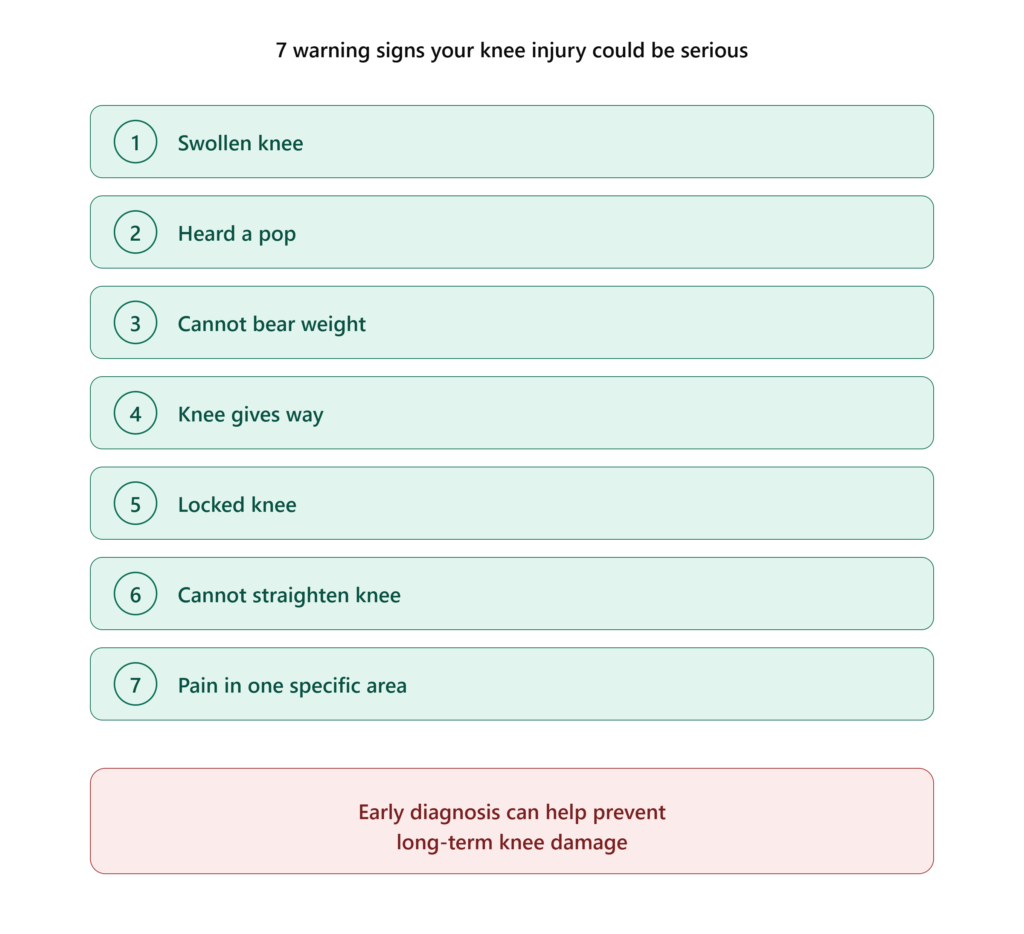
1. Your Knee Is Swollen
Mild swelling after an injury may not always be dangerous. However, if your knee becomes very swollen within a few hours after injury, it may indicate a serious problem such as an ACL tear, meniscus injury, ligament damage, or fracture.
Sudden swelling should not be ignored, especially if it is associated with severe pain or difficulty walking.
2. You Heard or Felt a Pop
A loud or painful “pop” at the time of injury can be a warning sign. This commonly happens during sports, awkward landing, twisting injury, or direct trauma to the knee.
A painful pop may be associated with ligament injuries such as an ACL tear and should be checked by an orthopedic specialist.
3. You Cannot Bear Weight
If you are unable to stand or walk properly after a knee injury, it may suggest a significant injury.
Severe pain while putting weight on the leg can occur due to:
- Ligament injury
- Meniscus tear
- Bone bruise
- Fracture
If walking is very painful or impossible, medical evaluation is recommended.
4. Your Knee Buckled or Gave Way
If your knee suddenly “gave way” during injury or keeps feeling unstable afterward, it may be a sign of ligament damage.
Knee instability is commonly seen in ACL injuries and can increase the risk of further damage to the meniscus or cartilage if left untreated.
5. Your Knee Feels Locked
A locked knee means you are unable to bend or straighten it properly.
This can happen when a torn part of the meniscus gets stuck inside the knee joint.
Some meniscus tears, especially bucket-handle tears, may require surgical treatment.
Locking or catching of the knee should be assessed by an orthopedic surgeon.
6. You Cannot Fully Straighten Your Knee
After an injury, pain and swelling can make movement difficult.
However, if you cannot fully straighten your knee even after some time, it may indicate a more serious injury.
This can be seen in:
- ACL tears
- Meniscus tears
- Patellar dislocation
- Internal knee joint injury
7. Pain Is Present in One Specific Area
Pain in a very specific area of the knee can sometimes point toward a particular injury.
- Pain along the inner side of the knee may suggest a meniscus injury.
- Pain along the outer side of the knee may also suggest a meniscus injury.
- Localized bone pain after trauma may suggest a fracture or stress injury.
Pain that does not improve should be properly examined.
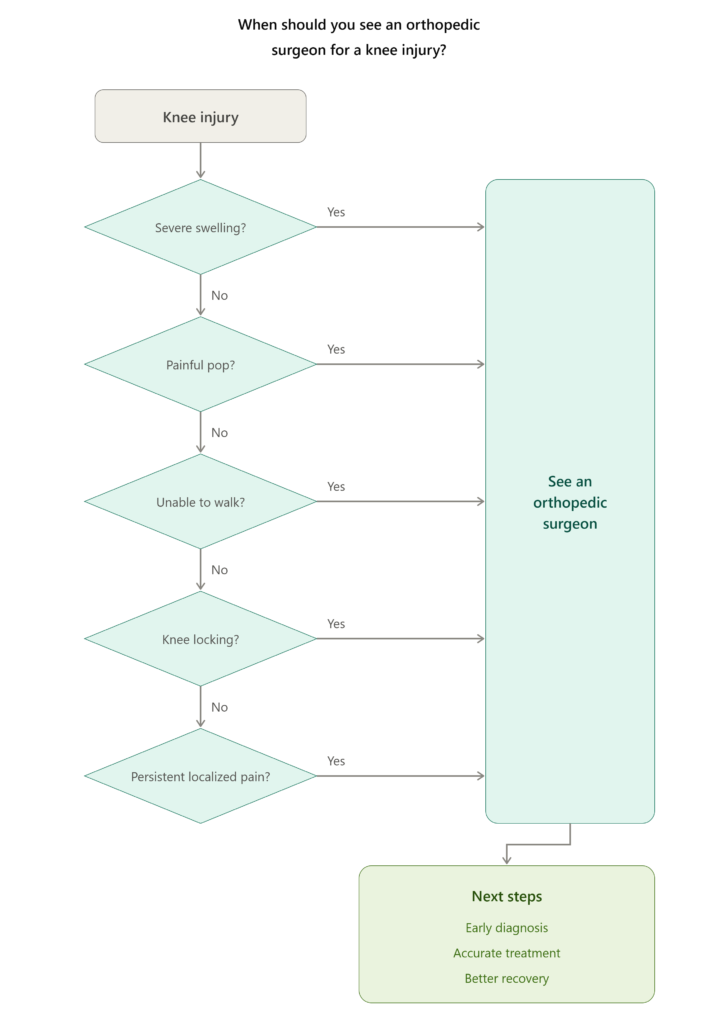
When Should You See an Orthopedic Surgeon?
You should consider seeing an orthopedic surgeon if you have:
- Severe swelling
- A painful pop at the time of injury
- Difficulty walking
- Knee instability
- Locking or catching
- Inability to fully straighten the knee
- Persistent pain in one specific area
Early diagnosis can help prevent further damage and improve recovery.
Final Message
Not every knee injury requires surgery, but some injuries should not be ignored.
If your symptoms are severe, persistent, or affecting your daily activities, it is better to get your knee examined by an orthopedic specialist.
Proper diagnosis and timely treatment can help you return safely to walking, sports, and routine life.
About the Author
Dr. Zeeshan Ahmad Siddique
Orthopedic & Trauma Surgeon
Department of Orthopaedic & Spine Surgery
Mayo Hospital Lahore
Clinical Note: This case has been shared for educational purposes. Patient privacy has been protected, and any clinical images are used with appropriate consent and anonymisation where applicable.
Leave a Reply